
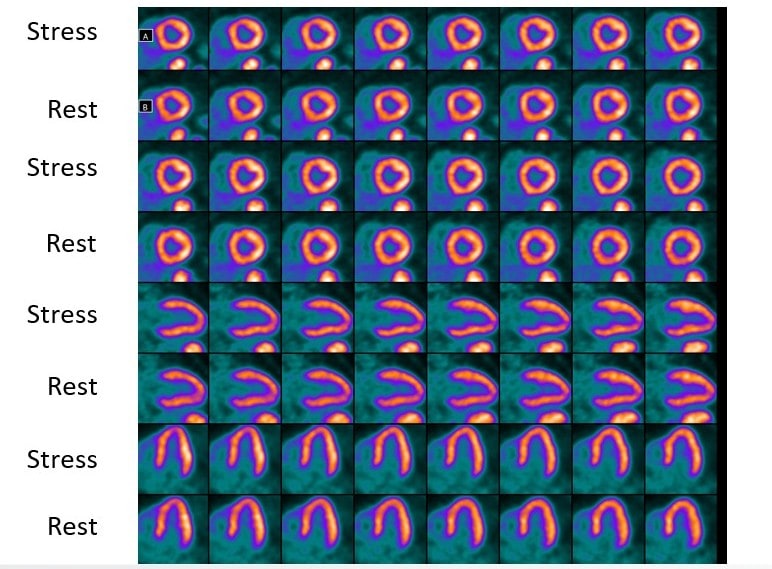

Rb-82 images from the newly posted case by Tamara Naneishvili, MD, Hadeer Hasaneen, MD, and ASNC Board of Directors Member Parthiban Arumugam, MBBS, FASNC
Based on these images, 63 percent of respondents to this month’s @MyASNC case poll said the patient was a non-responder. The remainder of the votes were split across severe coronary microvascular dysfunction (21.7 percent), coronary steal (8.7 percent), and high-risk scan (6.5 percent).
The patient was 66 years old when he presented with chest pain. He had known coronary artery disease, including a chronic total occlusion to the left anterior descending artery. The relative perfusion images and myocardial blood flow findings are from his Rb-82 PET study.
This case, by Tamara Naneishvili, MD, Hadeer Hasaneen, MD, and Parthiban Arumugam, MBBS, FASNC, illustrates the role of splenic switch-off as a marker of stress adequacy in patients undergoing vasodilator PET MPI.
Article Type
News & Announcements
Category
Education
Related Posts

A Practical Update for the Stress Lab: Q&A With Guideline Chair Dr. W. Lane Duvall
“I think clinicians reviewing the guideline will have a number of small…
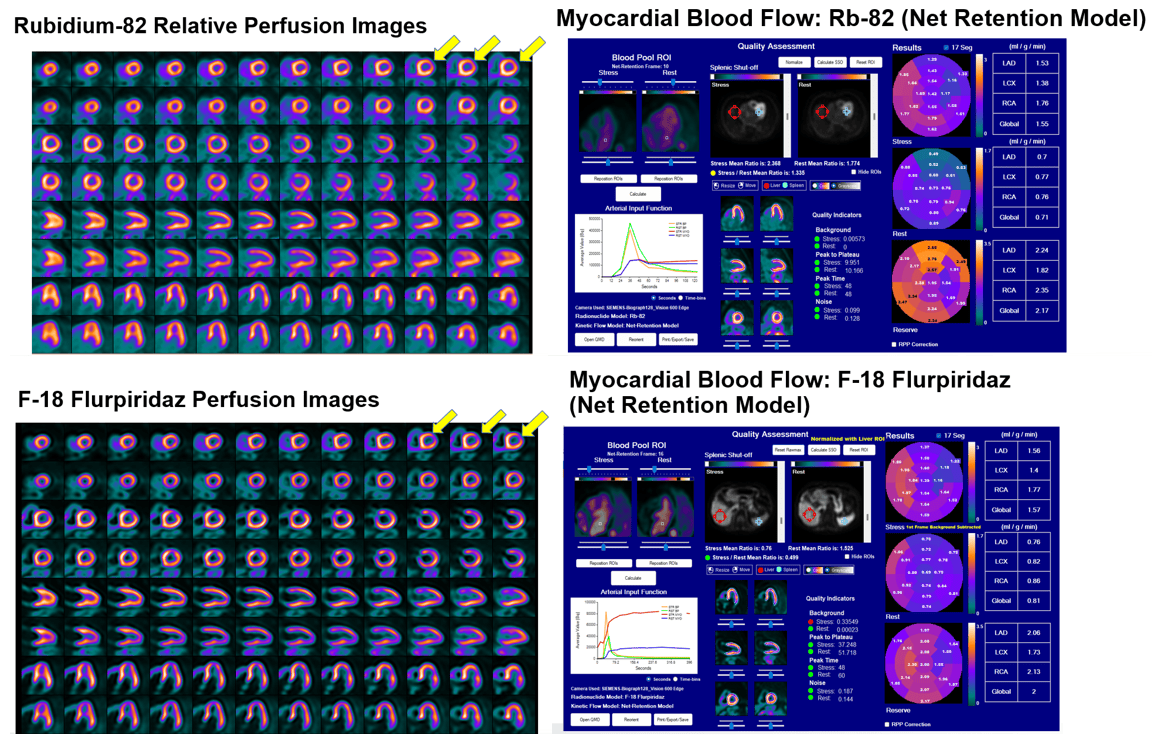
New Cardiac PET Case! Does the Radiotracer Change the Picture?
“Serial scans are now increasingly performed in cardiac transplant patients as a…

ASNC Offering Opportunities to Explore AI’s Expanding Role in Nuclear Cardiology
Physician and technologist members of ASNC’s Leadership Development Programs (LDP and TLDP)…