Working for You
ASNC is nuclear cardiology's voice on health policy matters and the principal advocate for professionals in the field. ASNC's advocacy team tackles issues impacting nuclear cardiology at every level, including legislative and regulatory concerns, state-level policies, third-party coverage challenges, and beyond. With your support and participation, ASNC has been instrumental in passing key federal legislation, delaying the AUC mandate, and preserving fair reimbursement for nuclear cardiology services.
Your engagement is critical to our continuing success. You can help ASNC advocate on behalf of your practice and your patients by staying current on health policy issues, responding to calls to action, and keeping your membership current.
The following are priority issues that ASNC is asking Congress to take action on in 2026:
Fix Prior Authorization and Protect Patients. Please join us in urging members of Congress to pass the Improving Seniors' Timely Access to Care Act (S. 1816 | H.R. 3514). LEARN MORE.
Support Patient Access to Care Through Physician Payment Adequacy and Stability.
- The Provider Reimbursement Stability Act (H.R. 8163) would reform Medicare Physician Fee Schedule budget-neutrality requirements that can lead to payment cuts and payment unpredictability. Ask your elected representatives to cosponsor this legislation. GET MORE INFO.
- ASNC is pushing Congress to pause the new Medicare "efficiency adjustment," which cut physician work RVUs by 2.5% effective this year. Join us in asking them to support the Efficiency Adjustment Delay Act (H.R. 7520). DETAILS HERE.
- Physicians are overdue for an inflationary update to Medicare Physician Fee Schedule payments. Remind your members of Congress that the costs of running a practice are increasing!
Reject the Prescriptive Appropriate Use Criteria Legislative Mandate. ASNC strongly supports appropriate use criteria but opposes burdensome administrative requirements that do not improve quality of care. The Society is asking Congress to stop the Radiology Outpatient Ordering Transmission (ROOT) Act (S. 1692 | H.R. 5737), which would revive the problematic Medicare Appropriate Use Criteria Program for advanced diagnostic imaging. Tell your Members of Congress to stop this legislation. LEARN MORE.
“ASNC speaks to policymakers about prior authorization, Medicare cuts and more”
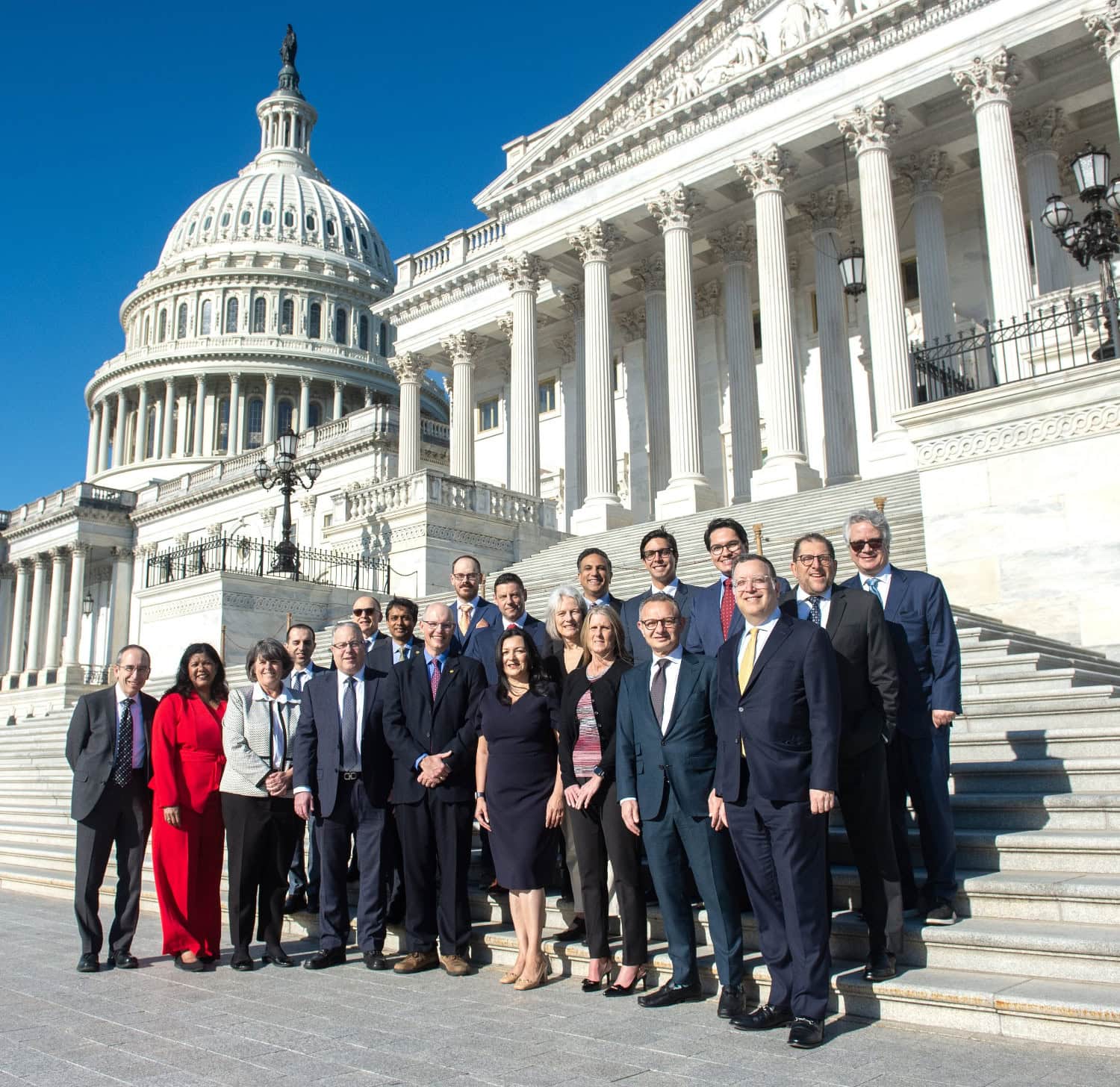
In this Cardiovascular Business video interview, ASNC President Jamieson M. Bourque, MD, MHS, FASNC, summarizes the messages that the Society's advocacy delegation delivered on May 5, 2026, during 66 visits with congressional offices. Dr. Bourque also highlighted takeaways from ASNC's second annual congressional briefing, which detailed how Congress can help with challenges that limit patient access to care.
Watch On-Demand: Nuclear Cardiology Reimbursement 2026 Webinar Recording
You must be logged in to view this content.
Advocacy Updates

ASNC Continues Opposition to H-1B Fees for Physicians
ASNC has joined a coalition of medical societies in opposing the Department…

ASNC Leader Appointed to U.S. Preventive Services Task Force
Venkatesh Murthy, MD, PhD, MASNC, has been appointed to the U.S. Preventive…
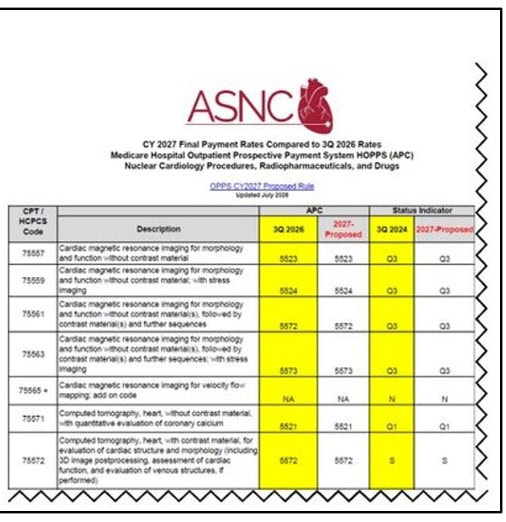
2027 HOPPS Proposed Rule Would Restructure Nuclear Medicine APCs, Could Affect Nuclear Cardiology Payment Rates
In the 2027 Hospital Outpatient Prospective Payment System (HOPPS) proposed rule, the…
ASNC relies on a team of physician experts who ensure nuclear cardiology is well represented in key policymaking arenas throughout the House of Medicine.

American Medical Association Relative Value Update Committee, aka 'The RUC'
In addition to chairing ASNC's Health Policy Committee, Friederike Keating, MD, FASNC, represents ASNC as an advisor on the American Medical Association's Relative Value Update Committee.
Also known as "the RUC," this body makes recommendations to the Centers for Medicare & Medicaid Services (CMS) on the relative values assigned to new or existing CPT codes. While CMS is not required to follow the RUC's recommendations, the committee plays a crucial role in helping the federal government determine the value of medical services in patient care.

American Medical Association CPT Advisory Committee
Edward Hulten, MD, MPH, FASNC, will represent ASNC on the American Medical Association's CPT Advisory Committee, which supports the AMA's CPT Editorial Panel. The panel meets regularly to revise, update, or modify CPT codes, descriptors, rules, and guidelines used in medical billing and reporting. The committee may advise the panel on procedure coding, nomenclature, and appropriateness; suggest changes to the code set; and support education on coding issues.
Dr. Hulten’s appointment will be finalized at the panel's April 2025 meeting.


American Medical Association House of Delegates
Suman Tandon, MD, FASNC, and Ahmet Oktay, MD, are ASNC's representative to the American Medical Association’s House of Delegates (HOD). The AMA HOD is the AMA's legislative and policymaking body, which meets twice per year to determine AMA policy. At HOD meetings, Drs. Tandon and Oktay speak on issues of importance to nuclear cardiology practice and vote on issues in accordance with ASNC’s policy priorities.

American College of Cardiology Imaging Section Leadership Council
ASNC Past President Dennis A. Calnon, MD, MASNC, is ASNC’s representative to the American College of Cardiology Imaging Section Leadership Council. This group of representatives from the major cardiovascular imaging modalities meets regularly to discuss policy issues affecting cardiology as a whole and imaging specifically and to offer input on the coordination of imaging activities in the College.

American Medical Association Collaborative on Artificial Intelligence
As the chair of ASNC's Artificial Intelligence Task Force, Jamieson M. Bourque, MD, MHS, MASNC, represents nuclear cardiology on the American Medical Association's Collaborative on Artificial Intelligence.
The AMA's AI Collaborative facilitates regular contact across societies for sharing of information on how AI technologies are affecting the practice of medicine today and in the future.
Policy Priorities
ASNC and its members play crucial roles in policy decisions affecting the practice of nuclear cardiology. ASNC's policy priorities include ensuring fair and appropriate reimbursement and health coverage, ensuring patients' access to appropriate imaging services, reducing prior authorization and administrative burden on practices, monitoring for medical isotope supply challenges, and participating in efforts to reform physician payment systems.
Reimbursement & Coverage
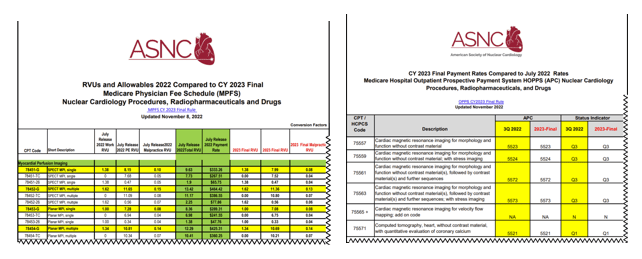
Navigating coverage and reimbursement can be a challenging task for all physicians. Nuclear cardiology faces unique payment and practice management issues in both the public and private sectors. Find ready-made payment charts made specifically for ASNC members and summaries of important developments in nuclear cardiology reimbursement.
Advocacy: Take Action
ASNC highlights time-sensitive news about health policy and advocacy issues that affect the delivery of quality cardiovascular care. As an ASNC member, you will receive advocacy alerts about reimbursement and coverage policies, coding instructions, medical isotope supply, and about other time-sensitive issues. These alerts will keep you current on important matters impacting your profession, your practice, and your patients. They will also detail how you can help.
ASNC’s grassroots advocacy works! With member support, ASNC has been instrumental in passing key legislation, delaying the AUC mandate, reducing the prior authorization requirements of some payers, improving coverage policies, and preserving fair reimbursement for nuclear cardiology services.
ASNC’s Advocacy Action Center makes it easy for you to lend your support for vital campaigns.