 “The ASNC AI Summit brought together a tremendous range of expertise and perspectives. I’m grateful to everyone who contributed to discussions that will help ASNC identify where AI can have the greatest beneficial impacts and how the Society can support members as the field evolves.”
Jamieson M. Bourque, MD, MHS, MASNC
ASNC President
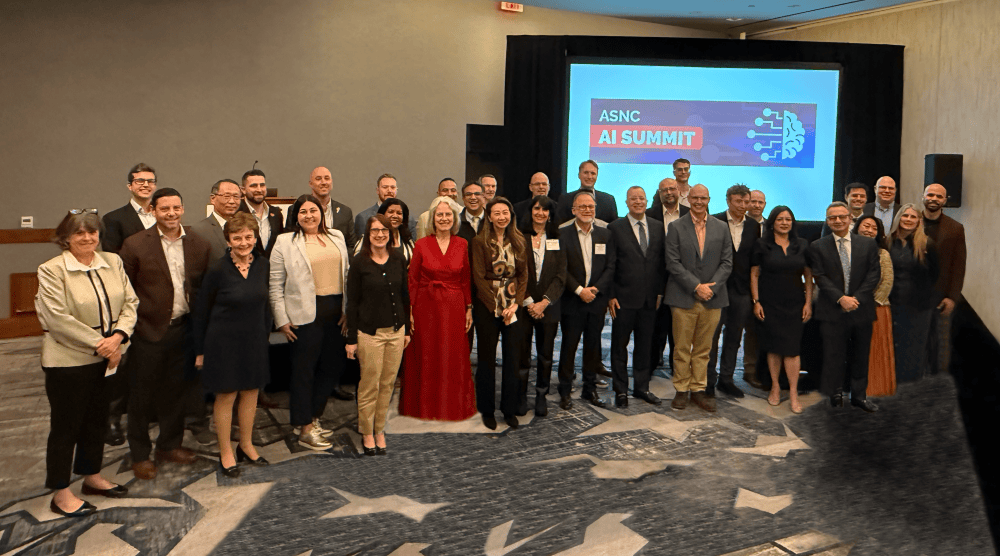
Last week, ASNC hosted its first AI Summit, bringing together more than 40 participants, including ASNC AI Task Force and Board of Directors members, researchers, and industry representatives. Led by ASNC President Jamieson M. Bourque, MD, MHS, MASNC, who also chairs the Society’s AI Task Force, the day-long summit explored how artificial intelligence could be leveraged to support nuclear cardiology across the continuum of care, from patient selection and image acquisition through interpretation, clinical implementation, and equitable access. Discussion repeatedly returned to the importance of clinical validation, workflow integration, and a defined role for ASNC.
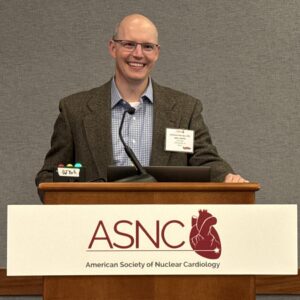
“Nuclear cardiology has an important opportunity to help shape how AI technologies are evaluated and implemented,” Dr. Bourque says. “The ASNC AI Summit brought together a tremendous range of expertise and perspectives. I’m grateful to everyone who contributed to discussions that will help ASNC identify where AI can have the greatest beneficial impacts and how the Society can support members as the field evolves.”
The program featured keynote presentations from Rohan Khera, MD, MS, associate professor at Yale University and director of the Cardiovascular Data Science Lab, on multimodal agentic AI and patients who need advanced cardiac imaging, and Timothy J. Poterucha, MD, of Mayo Clinic, who focused on translating clinical AI into practice. Speakers also addressed multimodal data; reimbursement and coding; and legal, regulatory, and ethical considerations surrounding AI. ASNC Task Force members shared perspectives on applications across the nuclear cardiology workflow.
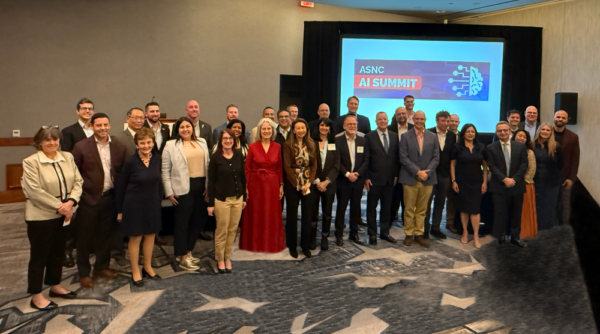
More than 40 participants gathered near ASNC headquarters for a day-long think-tank-style event examining AI’s potential value for nuclear cardiology and envisioning how to apply AI tools for optimal impact on clinical practice.
The discussions brought together clinical, research, industry, and policy perspectives to assess the current landscape of AI innovations and identify opportunities where AI could make meaningful differences in nuclear cardiology. Topics included improving patient and protocol selection; making imaging data more actionable for clinicians; supporting interpretation and reporting; and addressing the practical challenges of implementation, payment, and regulation. Participants also considered how ASNC can help identify priority applications, support responsible adoption, and advance education and advocacy.
The summit generated priorities and potential next steps as ASNC leaders consider how best to help members navigate the evolving roles of AI in nuclear cardiology. The ASNC Board of Directors also convened last week. Among the Board’s action was elevating the Society’s AI Task Force to a committee whose charge will include implementing priorities identified at the summit.
Watch for updates, including opportunities for you to participate in new initiatives. To ensure you receive news on ASNC’s activities, be sure to keep your membership current.
Article Type
News & Announcements
Category
Advocacy, Education, Guidelines & Quality, Industry, PatientFirst, Research
Related Posts

PYP Production Resumes at Sun Radiopharma; Curium Continues Regular Production
Your ASNC team stays in close touch with radiopharmaceutical manufacturers and radiopharmacies…
JNC Editor Challenges Nuclear Cardiology Community to Advance Inflammation Imaging and Clinical Evidence
Advancing molecular imaging of myocardial inflammation will require a concerted effort from…
Cardiac Amyloidosis and Suspected Coronary Disease: What Would You Do Next?
An 80-year-old man with chest pain and known ATTR cardiac amyloidosis, diagnosed…