

 “I think clinicians reviewing the guideline will have a number of small “wow moments” because they will come across a problem they face regularly and realize, “This is exactly the question I have been asking, and now there is guidance on it.”
– W. Lane Duvall, MD, MASNC
Guideline Writing Committee Chair
Nearly a decade has passed since ASNC last issued comprehensive guidance on stress testing. The new 2026 ASNC Guideline for Stress Testing in SPECT and PET Myocardial Perfusion Imaging is designed as a practical, beginning-to-end resource for clinicians and teams who perform and oversee stress testing.
We spoke with W. Lane Duvall, MD, MASNC, chair of the guideline writing committee, about why the update was needed, where clinicians might find “wow moments” in the new guidance, and how stress labs can put the document to work.
Why was it important to update the stress testing guideline now?
Dr. Duvall: It has been 10 years since the last guideline. That is a long time in medicine, especially in cardiology. The fundamentals of stress testing have not changed dramatically, but our knowledge, technology, and clinical practice have continued to evolve.
We felt it was important to update and modernize our guidance so clinicians will continue to feel confident that they are performing stress testing in a safe, effective, and contemporary way. Our goal was to give the cardiovascular imaging community a comprehensive, practical document they can use in everyday practice.
What will clinicians notice that is different from the 2016 guideline?
Dr. Duvall: One of the biggest changes is the amount of attention we give to the questions that come up repeatedly in real-world practice.
The Special Considerations section is much larger than it was in 2016. It addresses specific patient characteristics and clinical circumstances that do not necessarily come up with every test but, when they do, people want clear guidance.
Caffeine is a good example because it is an issue every stress lab deals with. We are emphasizing 24 hours of caffeine abstinence, with 12 hours as the bare minimum, based on additional evidence since the last guideline. We also address caffeine metabolism in patients with liver dysfunction, where the half-life may be prolonged and a longer period of abstinence may be needed.
Another example is the expanded section on seizure disorders, which are uncommon but certainly not unheard of in patients undergoing vasodilator stress. The guideline gives practical guidance on assessing risk and managing these patients.
A third example – there are many more – is the concrete recommendations around pregnancy, breastfeeding, and the use of radioactive imaging tracers. Those are situations where laboratories have told us they need clear, practical direction.
I think clinicians reviewing the guideline will have a number of small “wow moments” because they will come across a problem they face regularly and realize, “This is exactly the question I have been asking, and now there is guidance on it.”
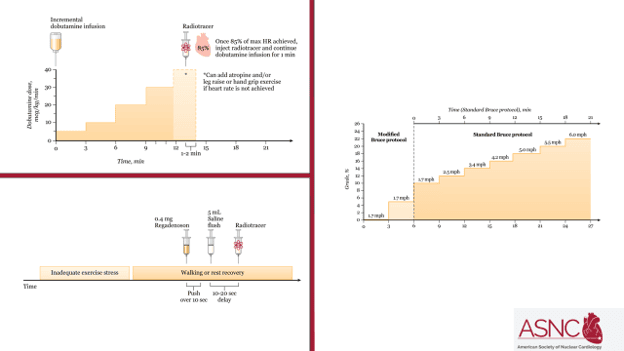
“Think of the guideline as a reference for the entire stress-testing process: preparing and selecting the patient, how to perform the test, contraindications and safety considerations, what training and education clinicians should have, emergency preparedness, and ongoing quality improvement,” says Dr. Duvall, writing committee chair. You’ll find step-by-step instructions for performing stress testing with all available stress agents, including easy-to-understand graphics/protocols. Top left: Dobutamine protocol. Right: Standard and Modified Bruce protocols. Bottom left: Regadenoson in recovery after inadequate exercise stress test.
Are there parts of the guideline that every stress lab should keep close at hand?
Dr. Duvall: Absolutely. We wrote portions of the guideline with exactly that kind of use in mind.
The tables on contraindications and cautionary conditions are especially useful. They provide a comprehensive way to look at who is, and who is not, an appropriate candidate for a particular type of stress testing.
I would also point people to the sections on indications for early termination or reversal of stress. These are among the tables that laboratories may want to print and keep readily available, tailored to the stressors used at their site.
The larger goal was to provide clear instructions for how to perform stress testing safely, efficiently, and appropriately from beginning to end. ASNC is also planning distilled Practice Points for individual stressors and well as one-page resources or posters that summarize the key “how-to” elements and protocol options.
How should clinicians and stress-lab teams use a document this comprehensive?
Dr. Duvall: Think of the guideline as a reference for the entire stress-testing process: preparing and selecting the patient, how to perform the test, contraindications and safety considerations, what training and education clinicians should have, emergency preparedness, and ongoing quality improvement. The writing committee was committed to covering what a stress laboratory needs from beginning to end.
Anyone routinely involved in stress testing should be familiar with this document – not only physicians, but also nurses, advanced practice providers, physician assistants, exercise physiologists, technologists, and others who are part of the testing team.
Medical directors may want to share the entire document with their teams or pull out the sections that are most relevant to their laboratory. This is not a document you read once and put away. We hope you will return to it when a specific patient, protocol, or safety question comes up.
For people who perform stress testing regularly, it is also an opportunity to refresh their knowledge and make sure their approach to patient selection and testing remains current.
Article Type
News & Announcements
Category
Education, Guidelines & Quality, Publications, Research
Related Posts

ASNC President-Elect Looks to 2027: Building Bridges and Advancing Research
“An advance in imaging changes practice and outcomes only when the people,…
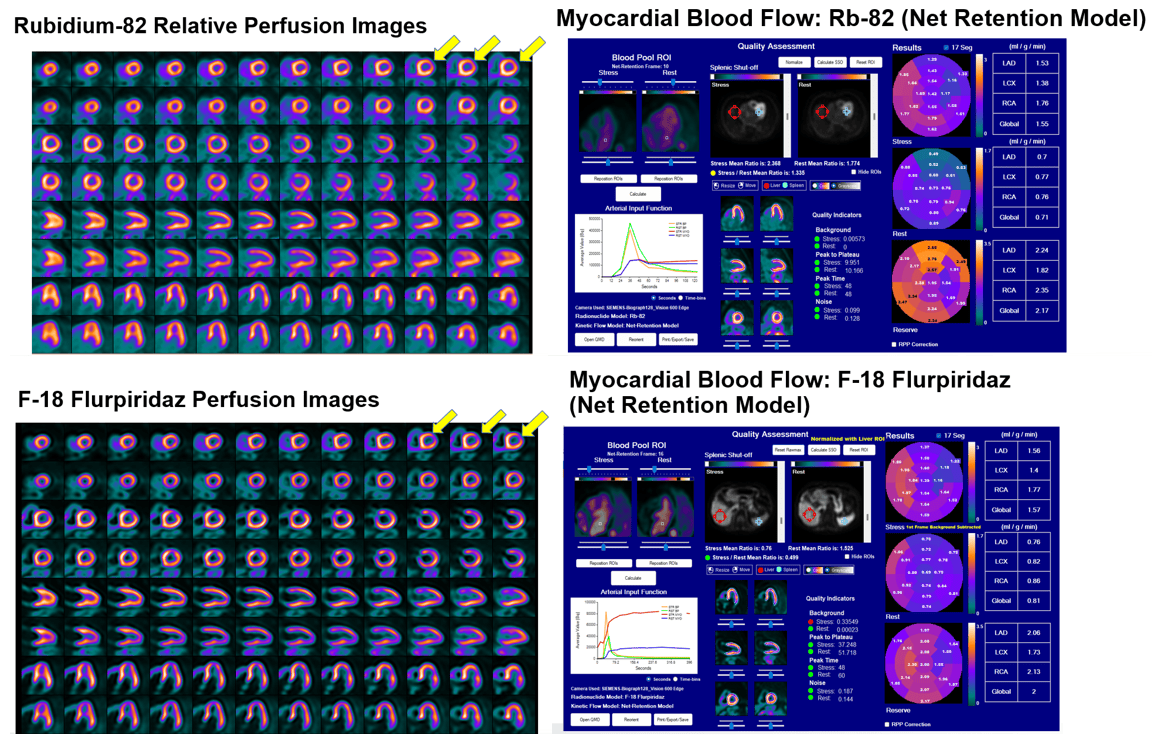
New Cardiac PET Case! Does the Radiotracer Change the Picture?
“Serial scans are now increasingly performed in cardiac transplant patients as a…
ASNC Releases New Guideline for Stress Testing in SPECT and PET Myocardial Perfusion Imaging
ASNC Releases New Guideline for Stress Testing in SPECT and PET Myocardial…