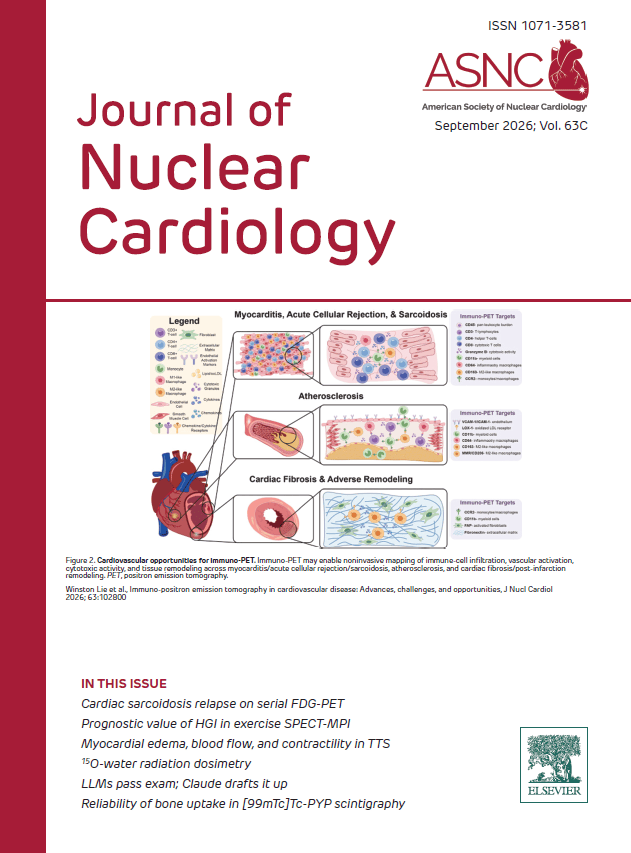
Look inside the latest issue of JNC. To access full-text articles, log in from your ASNC member account.
From refining radiation dosimetry to improving risk prediction and expanding molecular imaging possibilities, quantitative advances are shaping the future of nuclear cardiology. The new issue of the Journal of Nuclear Cardiology (JNC) explores this momentum across a range of clinical and research applications.
The issue includes a study evaluating large language models on the ASNC Board Preparation Exam, with results that highlight both the rapid advances in AI and the continuing importance of human image interpretation. As Marcelo F. Di Carli, MD, MASNC, notes in his Editor’s Page, the field’s progress will come from multiple directions, including AI-assisted tools and careful, clinically meaningful measurement.
Dr. Di Carli also highlights studies in the just-posted issue that demonstrate how more precise measurements can challenge established assumptions and add clinical value. Among them, Lubberink et al. report that the effective radiation dose associated with O-15-water may be roughly half of estimates based on decades-old pharmacokinetic modeling. Yang et al. show that a hemodynamic gain index derived from routine exercise stress data improves prognostic discrimination beyond a normal perfusion scan.
Other studies in the new JNC connect myocardial edema on cardiac magnetic resonance to PET measures of myocardial blood flow in Takotsubo syndrome, examine FDG uptake as a predictor of cardiac sarcoidosis relapse, and explore emerging applications of immuno-PET.
Article Type
JNC News, News & Announcements
Category
Journal of Nuclear Cardiology (JNC), Publications, Research
Related Posts

A Practical Update for the Stress Lab: Q&A With Guideline Chair Dr. W. Lane Duvall
“I think clinicians reviewing the guideline will have a number of small…
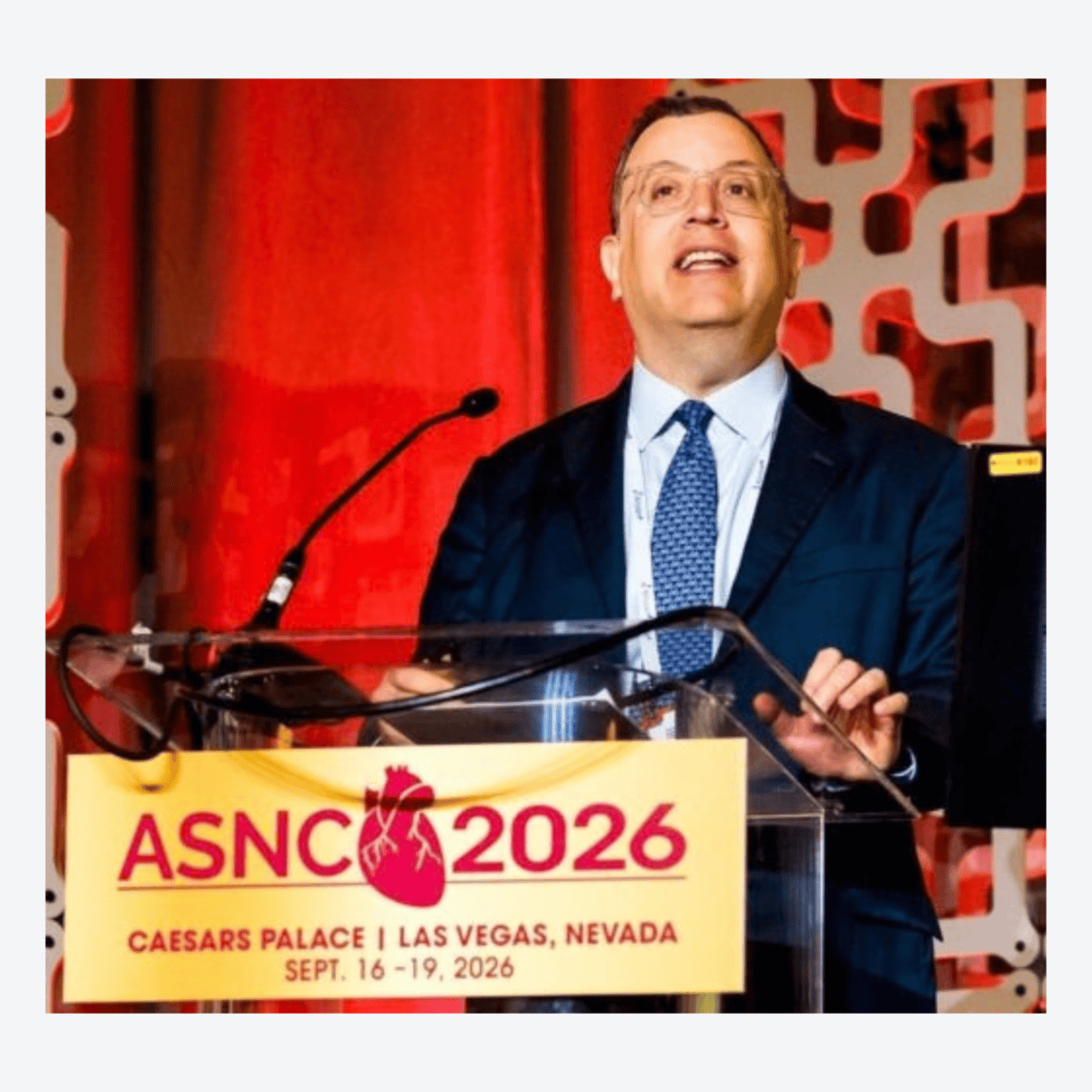
ASNC President-Elect Looks to 2027: Building Bridges and Advancing Research
“An advance in imaging changes practice and outcomes only when the people,…
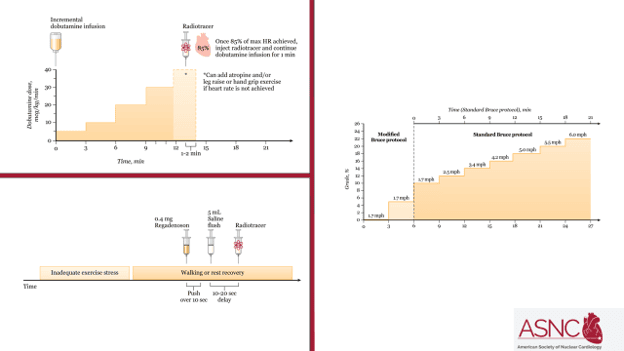
ASNC Releases New Guideline for Stress Testing in SPECT and PET Myocardial Perfusion Imaging
ASNC Releases New Guideline for Stress Testing in SPECT and PET Myocardial…