

On May 21, the House Ways and Means Committee passed H.R. 8163, the Provider Reimbursement Stability Act. This legislation would increase the budget-neutrality threshold from $20 million to $54.3 million and would index to the cumulative percentage increase in the Medicare Economic Index every 5 years. If passed into law, the legislation would also limit year-to-year variance in the conversion factor by 2.5%.
These reforms to the Medicare physician fee schedule (MPFS) would –
- Raise the dollar threshold at which budget neutrality kicks in,
- Prevent forced downward payment adjustments in any given year,
- Stabilize year-to-year changes to the conversion factor, and
- Protect physicians from drastic swings in reimbursement rates.
The legislation would also help to fix underlying mechanics in the MPFS that have resulted in a 33% decline in physician reimbursement from 2001 to 2026.
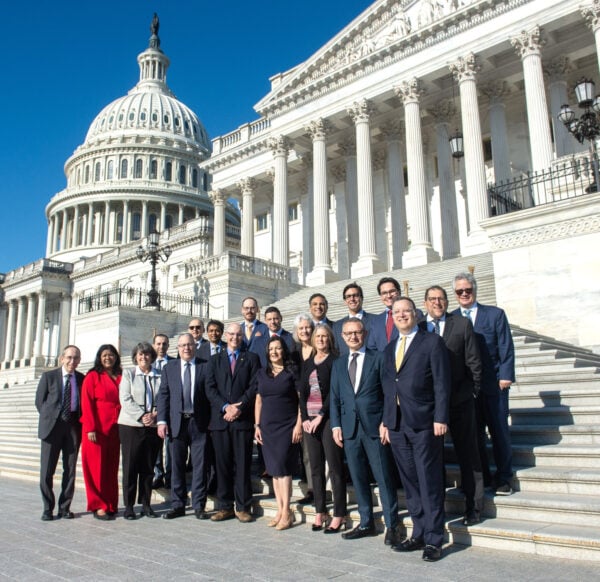
ASNC advocates traveled from across the country for meetings with congressional offices about issues that affect patient access to care. Among the bills they advocated for was H.R. 8163, the Provider Reimbursement Stability Act.
ASNC has been a fierce advocate for the passage of H.R. 8163. During recent Capitol Hill meetings, physician leaders urged congressional offices to pass the bill. ASNC also joined an American-Medical-Association-led coalition of medical societies on a letter endorsing the legislation. “The current $20 million threshold, unchanged since 1992, is woefully outdated and bears no relationship to the size and complexity of today’s MPFS,” the societies explained. “… [The] legislation introduces long-overdue modernization … providing guardrails against dramatic swings.”
Bill sponsor Rep. Greg Murphy, MD (R-NC), has expressed concerns about the impact of payment instability on the physician workforce. “Physicians in America have been crushed for decades by persistent cuts to the Medicare Physician Fee Schedule,” he said. “Access to high-quality, affordable care is drying up around the country, particularly in rural communities, because reimbursement is less than the cost of care. These reductions are driving independent physicians out of practice, either to retire early, sell out to private equity, or be acquired by consolidated hospital systems.”
ASNC is now urging passage of the legislation by the full House of Representatives and will continue to advocate for passage by the Senate. You can help by reaching out to your congressional delegation; ask them to support H.R. 8163, the Provider Reimbursement Stability Act.
Article Type
News & Announcements
Category
Advocacy
Related Posts

‘It’s All About the Patient’: ASNC President-Elect Looks to the Future of Nuclear Cardiology
In a video interview with Cardiovascular Business, ASNC-Elect President Andrew J. Einstein,…

ASNC Continues Opposition to H-1B Fees for Physicians
ASNC has joined a coalition of medical societies in opposing the Department…

ASNC Leader Appointed to U.S. Preventive Services Task Force
Venkatesh Murthy, MD, PhD, MASNC, has been appointed to the U.S. Preventive…