
 “The collection of studies in this issue suggests that rather than fading into the background, SPECT may be entering a new phase – one defined by quantification, molecular phenotyping, and scalability.”
Marcelo F. Di Carli, MD, MASNC
In his February 2026 JNC Editor’s Page
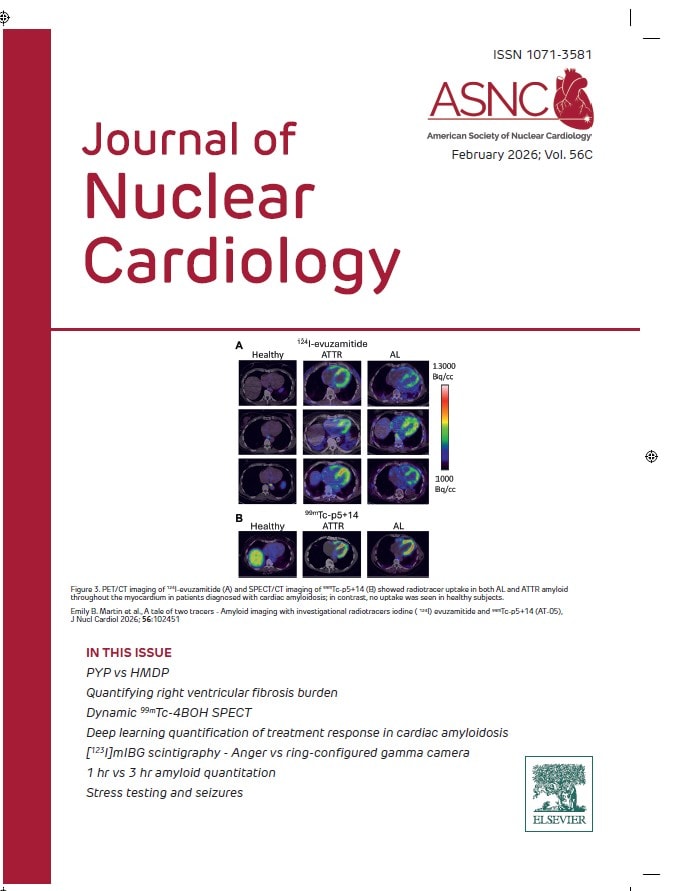
In the latest issue of the Journal of Nuclear Cardiology, Editor-in-Chief Marcelo F. Di Carli, MD, MASNC, pushes back against the idea that SPECT will be “replaced” by PET. Such an “outdated assumption” underestimates the exciting innovations unfolding in SPECT as well as its remarkable scale and the “disease pathways it can uniquely interrogate,” he says.
The studies in the new JNC issue illustrate how rapidly SPECT is evolving due to emerging tracers; advances in physiologic measurement, including myocardial blood flow quantification; and molecular phenotyping. Dr. Di Carli asks cardiac imagers to embrace a framework where PET will expand what they can do at the cutting edge and SPECT will expand what they can do everywhere.
Sustaining the momentum will require investment in the next generation of investigators, reviewers, and editors, says Dr. Di Carli. He invites fellows-in-training and cardiac imaging professionals who completed their training in the past 5 years, to apply for a spot on the Journal‘s 2026-2027 Early Career Editorial Board. This is a unique opportunity to gain editorial experience, mentorship, and skills that will support your growth as an author, peer reviewer, and future editor. Applications are due April 1.
Article Type
JNC News
Category
Journal of Nuclear Cardiology (JNC)
Related Posts

More HMDP Coming in Late March, Radiopharmaceutical Manufacturer Says
Following supply issues starting in January, ASNC is maintaining close contact with…

Immediate Impact! ASNC Statement Driving Cardiac PET Adoption Across the United States
“ASNC’s Clinical Indications for PET statement got the attention of our hospital…
Cardiac PET, If Available, Is Now the Preferred Test for Evaluating CAD in All Patients
“Based on the clinical and scientific evidence now available, there are no…